

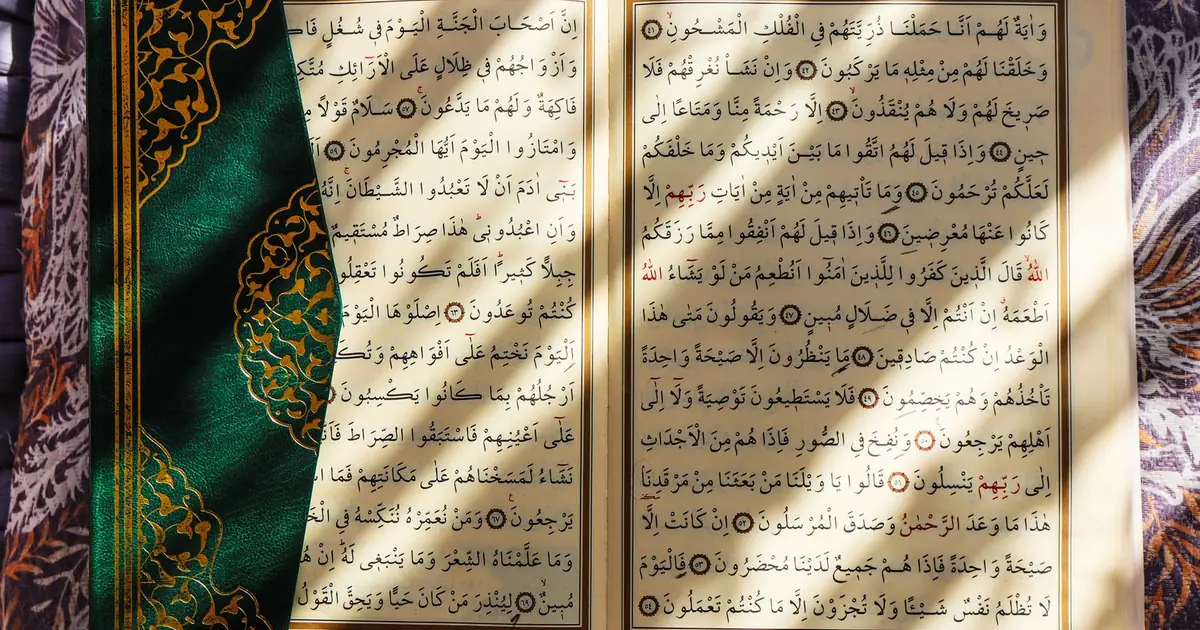
Tajweed (say it: taj-weed) means reading the Quran with the correct sound for every letter. Each letter comes from its own place in the mouth or throat, and some sounds are held longer than others. Tajweed is the set of rules that explains all of this.
If you are new to it, do not worry. You do not need to know Arabic. You only need to be able to read the letters, and a patient teacher.
Why do people learn Tajweed?
Many Arabic letters sound almost the same to English ears. A small change in the sound can change how a word is heard. Tajweed helps you say each letter clearly and correctly, read smoothly instead of guessing, and feel more confident when you recite, at home or in prayer.
The main parts of Tajweed, in plain English
You do not learn everything at once. Beginners usually meet these parts first.
1. Where letters come from (makharij)
Makharij means "the exit points" of the letters. Some letters come from the throat, some from the tongue, some from the lips. Learning the exit point is the first step to a clean sound.
2. How long to hold a sound (madd)
Some sounds are stretched for a set length, and others are short. Reading them in the wrong length is one of the most common beginner mistakes.
3. Rules for noon and meem
Certain letters change how a noon or meem sounds when they meet. For example, the sound may be hidden, blended, or made clear. A teacher shows you each case with examples.
4. Stopping and starting
Where you pause, and how you end a word when you stop, also has simple rules.
Do I need to learn Qaida first?
Yes, if you cannot yet read the letters. A good order is:
- Noorani Qaida to learn the letters, their sounds and how they join
- Nazra to read the Quran with growing fluency
- Tajweed to polish your reading with the rules
If you can already read the Quran but nobody ever corrected your sounds, you can start Tajweed now. See our guide on Nazra or Tajweed: which course does my child need.
How long does it take?
It depends on the learner and how often you practise. Students who can already read usually need about 3 to 6 months at 3 classes a week to learn the main rules and use them in their reading.
Can I learn Tajweed online?
Yes. In an online one-to-one class, the teacher listens to you read and corrects each sound straight away. That is the part that matters most, because Tajweed is learned by ear as well as by rules. Adults can start too: see learning to read the Quran as an adult.
A simple way to practise Tajweed at home
- Read one short passage your teacher has taught, slowly and out loud
- Say the exit point of each tricky letter before you read the word
- Record yourself on your phone and listen back, then compare with your teacher's recitation
- Practise for 10 minutes a day rather than one long session a week
- Write down the sounds you are unsure about and bring them to your next class
Questions beginners often ask
Is Tajweed difficult?
Not when it is taught one small step at a time. Most people find the first rules easy and improve steadily with regular practice.
Can children learn Tajweed?
Yes, once they can read the letters. We teach it gradually, mixed into their reading practice, so it never feels heavy.
Do I need a teacher, or can I learn from videos?
Videos can explain the rules, but they cannot hear you. A teacher can tell you exactly which sound needs fixing, so most people improve faster with one.
Try a free class
In your free 30-minute class, our founder listens to you or your child read, finds the right starting point and sends a short plan. Book your free class or see our Tajweed course.